
How to Taste Coffee at Home: A Beginner’s Guide Without the Snobbery
Learn how to taste coffee at home with five simple steps, a tasting scorecard and a fun invitation to Big Al’s Mystery Coffee Challenge.
Table of Contents
Introduction
How to taste coffee at home without fancy equipment, expensive beans or a vocabulary borrowed from a wine critic? Grab two coffees, a couple of mugs and about 30 minutes.
I’ve enjoyed coffee in cafés around the world. Some cups were memorable. Others left me wondering whether the barista had a personal grudge against me.
But why do we love one coffee and dislike another? This simple coffee tasting for beginners will help you recognise different aromas, flavours and textures. And no, you don’t need to identify hints of Himalayan blueberries.
Your Coffee Tasting at Home: Quick Guide
| What you need | What to prepare |
|---|---|
| Coffee | Two different coffees, ideally contrasting roasts |
| Equipment | Your usual coffee maker |
| Cups | Two similar mugs |
| Extras | Fresh water, paper and pen |
| Time | About 30 minutes, including brewing |
| Goal | Find your favourite and understand why |
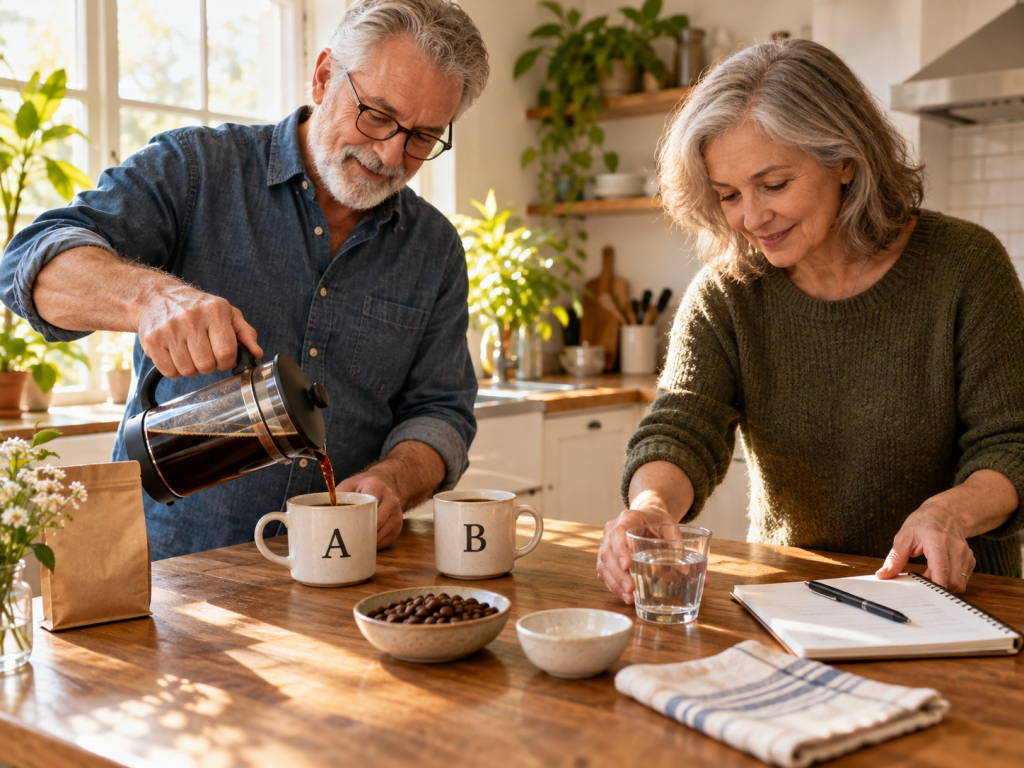
Before starting: When learning how to taste coffee at home, brew both coffees using the same equipment, similar coffee-to-water ratios and consistent brewing conditions. Label the cups A and B. Keep the packaging hidden until you’ve finished.
How to Taste Coffee at Home in Five Easy Steps
Step 1: Smell Before You Sip
Smell the dry coffee grounds, then the freshly brewed coffee. Does the aroma remind you of chocolate, toasted nuts, fruit or something smoky? Write down your first impression.
And if your answer is “smells like coffee,” that is a perfectly respectable beginning.
Step 2: Take Your First Sip
Allow the coffee to cool to a comfortable temperature. Take a small sip and let the coffee move around your mouth. Does the flavour seem sweet, bitter, bright or bold?
Try the coffee black initially, if practical. Add milk or sugar later to see which works best for your regular routine.
Step 3: Notice the Body and Acidity
Body describes how coffee feels in your mouth. Is it light and delicate or full and creamy? Acidity describes brightness, rather like the lively sensation of a crisp apple. It is different from a coffee causing stomach discomfort.
Which combination appeals to you? For more detail, visit our coffee tasting and flavour guide.
Step 4: Notice the Finish
After swallowing, notice the flavour left behind. Does it disappear quickly? Does a pleasant sweetness linger? Or does bitterness hang around longer than an unwanted dinner guest?
This is the finish, or aftertaste. Taste again as the coffee cools, and sip water between samples.
Step 5: Compare and Choose
Taste Coffee A and Coffee B side by side. Which smells better? Which feels smoother? Which has the more enjoyable finish?
Most importantly, which coffee would you happily drink again tomorrow? Don’t let price or packaging make the decision.
Big Al’s Coffee Tasting Scorecard
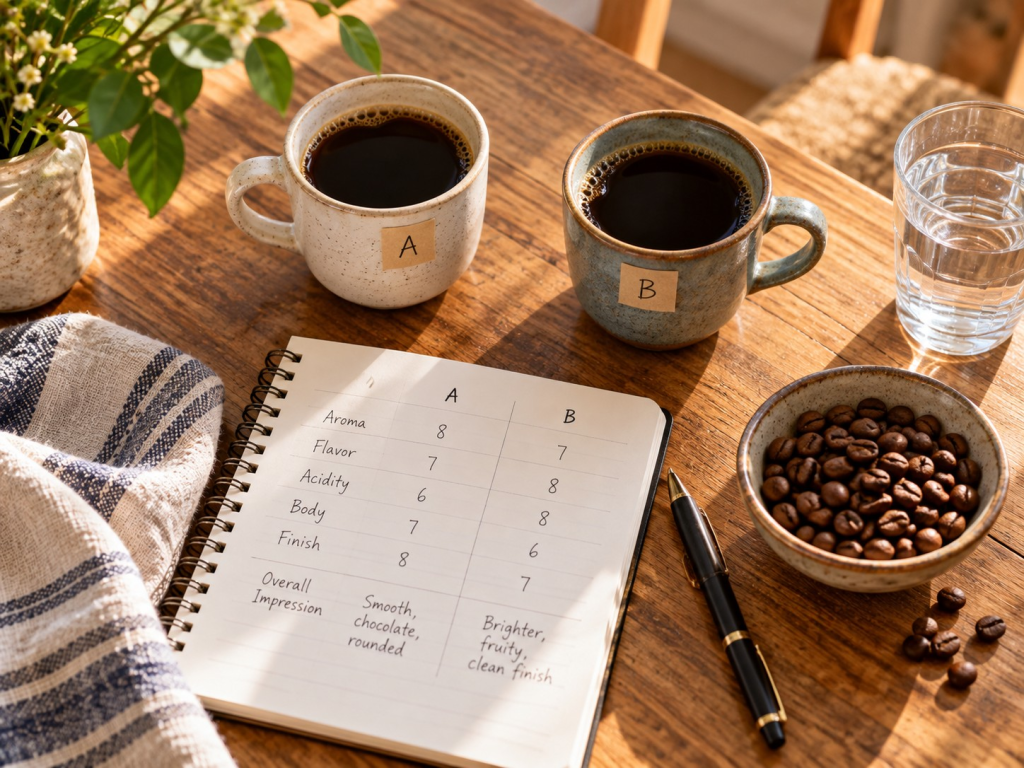
A simple scorecard makes learning how to taste coffee at home easier. Rate each category from 1 (didn’t enjoy) to 5 (loved it). These are personal enjoyment scores, not professional quality ratings.
| Your observations | Coffee A | Coffee B |
|---|---|---|
| Aroma (1–5) | ____ | ____ |
| Flavour (1–5) | ____ | ____ |
| Mouthfeel (1–5) | ____ | ____ |
| Overall enjoyment (1–5) | ____ | ____ |
| Total (out of 20) | ____ | ____ |
| Flavour notes | ____ | ____ |
| Would I buy again? | Yes / No | Yes / No |
My favourite: ____________________ Why: ____________________
If the $12 coffee beats the $25 coffee, congratulations. You’ve enjoyed yourself and potentially saved a few dollars.
What Should You Taste Next?
Once you know how to taste coffee at home, try a light roast against a dark roast, or compare two medium roasts from Canadian roasters. Our coffee roast levels guide explains what to expect.
For real product comparisons, explore our Kicking Horse Coffee review and Lavazza coffee review. Read our observations, then form your own opinion.

Ready for the Big Al’s Mystery Coffee Challenge?
Invite a few friends over and ask everyone to bring a coffee nobody else has tried. Set an affordable spending limit. Keep the brands secret.
Brew each sample consistently, label the cups, hand out scorecards, then taste, compare, vote and reveal the winners.
Will a grocery-store bargain steal the show? Will someone identify tropical passion fruit while everyone else tastes burnt toast? We’ll explore the full Mystery Coffee Challenge in a separate guide.
Frequently Asked Questions
Do I need special coffee tasting equipment?
No. Your regular coffee maker, two similar cups and a notebook are enough. Consistent preparation matters more than expensive equipment.
Should coffee be tasted black?
Start black when practical to identify the coffee’s natural characteristics. Then add your preferred milk, cream or sweetener and compare again.
What do chocolate or fruit flavour notes mean?
These describe aromas and flavours reminiscent of familiar foods. In unflavoured coffee, they don’t mean chocolate or fruit has been added.
Final Thoughts: Trust Your Taste Buds
Learning how to taste coffee at home isn’t about becoming an expert. It’s about paying attention, comparing a couple of coffees and understanding your preferences.
Start small. Take notes. Try something new. Then invite your friends over for a little coffee competition.
The best coffee isn’t necessarily the most expensive or highest rated. It’s the one you enjoy drinking.
What’s your favourite coffee? Tell us in the comments. Your recommendation might inspire another Coffee Club reader’s next tasting.
More Coffee Guides From Big Al’s Coffee Club
- Coffee Tasting and Flavour Guide
- How to Read a Coffee Bag Label
- Whole Bean vs Ground Coffee
- Coffee Roast Levels
External Coffee Education References
- Specialty Coffee Association: Coffee education
- World Coffee Research Sensory Lexicon
- Coffee Taster’s Flavor Wheel
- Coffee Quality Institute
Please note: the opinions expressed in this post should never be construed as advice. The thoughts are based on my experiences and those of my friends and family. I am not a restaurateur or a formal barista. I just love coffee and love sharing what I learn with everyone. Please enjoy and share your favourites in the comments section.
Also: If considering a change in diet, exercise, nutrition and/or supplements, you must consult your medical practitioner to make sure that what you are about to embark upon doesn’t interfere with your current treatments.
Another note: on images, if the picture does not have my logo, I have downloaded it from either Unsplash or iStock. If you are looking for images, please check them out. I may from time to time use AI to create or enhance my images.