
Coffee Roast Levels: How to Choose Light, Medium or Dark Canadian Coffee
Confused by light, medium and dark coffee? Compare flavour, bitterness, caffeine and brewing methods before choosing your next Canadian roasted coffee.
Table of Contents
Introduction
Coffee roast levels seem simple until you face a shelf filled with light, medium, medium-dark, French and espresso roasts. Suddenly, buying coffee feels like an exam you forgot to study for.
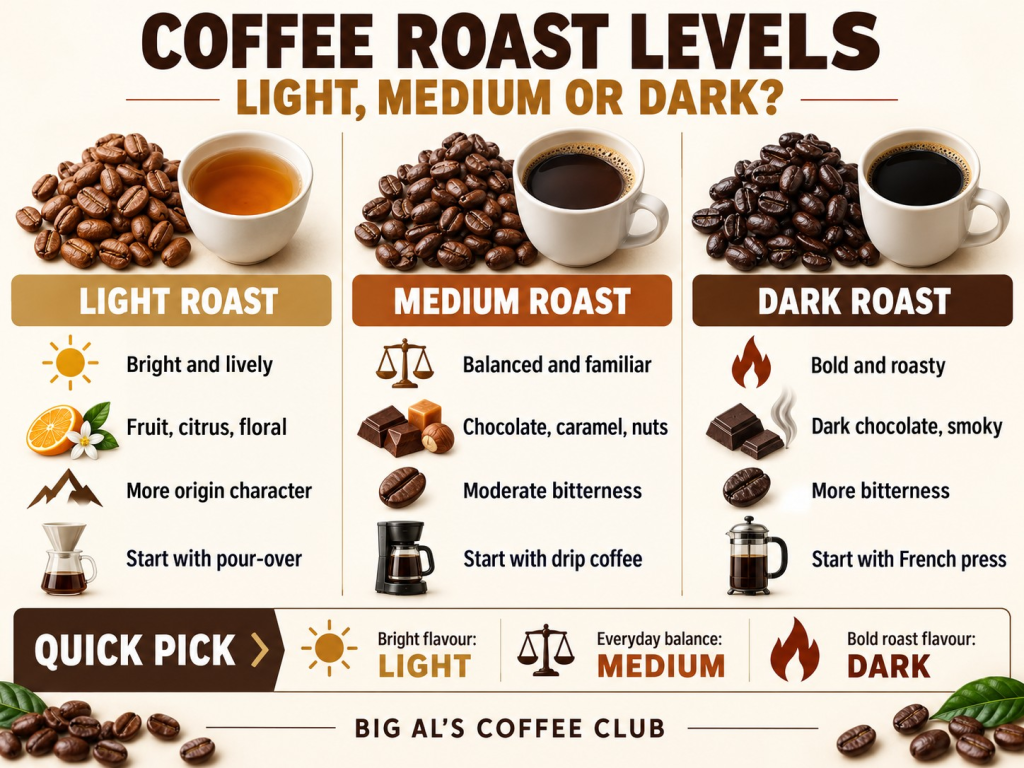
Here is the short answer. Choose light roast for bright and fruity flavours. Choose medium for a balanced, familiar cup. Choose dark for bold, roasted flavours with more bitterness.
I prefer dark roast, which makes little sense given my lifelong enthusiasm for anything sweet. Still, coffee does not need to match your dessert personality. Your taste buds make the final decision.
Coffee Roast Levels at a Glance
Use this table before your next coffee-shopping trip.
| If you enjoy | Start with |
|---|---|
| Fruit, citrus or floral flavours | Light roast |
| Smooth, balanced coffee | Medium roast |
| Chocolate, caramel and nuts | Medium or medium-dark |
| Smoky or bittersweet flavours | Dark roast |
| Coffee served black | Any roast matching your taste |
| Coffee with milk or cream | Medium-dark or dark |
| An everyday drip-machine coffee | Medium roast |
| Comparing different origins | Light roast |
These are starting points, not commandments from the coffee gods. Brewing method, grind size, freshness, water and coffee quantity also shape your cup.
What Do Coffee Roast Levels Mean?
Coffee roast levels describe how far green coffee beans develop during roasting. Time, temperature and the roaster’s decisions change the beans’ colour, aroma, density and flavour.
Light-roasted beans receive less roast development. Dark-roasted beans develop further. Medium roast sits somewhere between them.
The Coffee Association of Canada explains how roasting time and temperature develop coffee flavour and aroma. The National Coffee Association also separates common roasts by colour, surface oil and flavour.
There is one snag. Roast names are not perfectly consistent between companies.
The Specialty Coffee Association has discussed the confusion surrounding terms such as French, Italian and Full City. One roaster’s medium might taste closer to another company’s medium-dark.
Treat the roast label as your first clue. Then read the tasting notes, origin and roast date. My guide to reading a coffee bag label explains those details.
Light Roast Coffee: Bright and Lively
Light roast coffee usually has a light brown colour and little visible surface oil. Its flavours often lean toward fruit, flowers, citrus or tea.
Lighter roasting usually preserves more flavours associated with the beans’ variety, origin and processing. This helps you notice differences between coffees grown in Ethiopia, Colombia, Guatemala and other producing countries.
Light roast often tastes brighter than medium or dark roast. Coffee professionals call this acidity. In tasting language, acidity means a lively or crisp sensation. It does not automatically mean sour coffee.
Choose light roast if you enjoy:
- Fruit, citrus or floral tasting notes
- A lighter mouthfeel
- Clear differences between coffee origins
- Pour-over or carefully prepared drip coffee
- Drinking coffee black
Skip light roast if tart flavours make you wonder whether someone squeezed a lemon into your mug.
Light roast often needs closer attention during brewing. Grind size, water temperature and brewing time affect whether the cup tastes pleasantly bright or sharply sour.
Medium Coffee Roast Levels Offer Balance
Medium roast is the sensible starting point for most shoppers. The beans are medium brown and usually dry on the surface.
Common flavour descriptions include chocolate, caramel, nuts and mild fruit. You still taste some character from the beans, while the roast adds sweetness and depth.
Choose medium roast if you want:
- A balanced everyday coffee
- Moderate bitterness
- Familiar chocolate or nut flavours
- One coffee for several brewing methods
- A forgiving starting point for an automatic drip machine
Medium roast suits people who ask how to choose a coffee roast but have no firm flavour preference. Start in the middle. Move lighter or darker after deciding what your first bag lacks.
Kicking Horse Three Sisters is an interesting example. The company blends light, medium and dark-roasted beans, although it markets the finished blend as medium roast.
I found Three Sisters smoother and milder than the darker Kicking Horse blends I tried. You will find my full verdict in the Kicking Horse Coffee review.
Dark Roast Coffee: Bold and Roasty
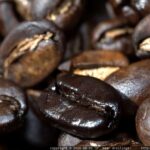
Dark roast beans range from deep brown to nearly black. Surface oil often becomes more visible as roast development increases, although appearance also changes with time and storage.
The flavour usually shifts away from delicate origin notes and toward flavours created during roasting. Expect dark chocolate, smoke, toasted nuts or bittersweet notes.
I prefer dark roast. I drink my coffee black, so there is nowhere for weak flavour to hide. I want a cup with enough backbone to announce its arrival.
Choose dark roast if you enjoy:
- Bold roasted flavours
- Dark chocolate or smoky notes
- More noticeable bitterness
- Coffee served with milk or cream
- French press, moka pot or espresso-style drinks
Grizzly Claw from Kicking Horse sits closer to my preferred end of the scale. Kicking Horse describes it as a dark roast with dark chocolate, cacao, brown sugar and roasted hazelnut notes.
Dark roast does not automatically mean better coffee. It means a different flavour. A stale, heavily roasted bag is still a stale, heavily roasted bag.
Light vs Medium vs Dark Roast Coffee
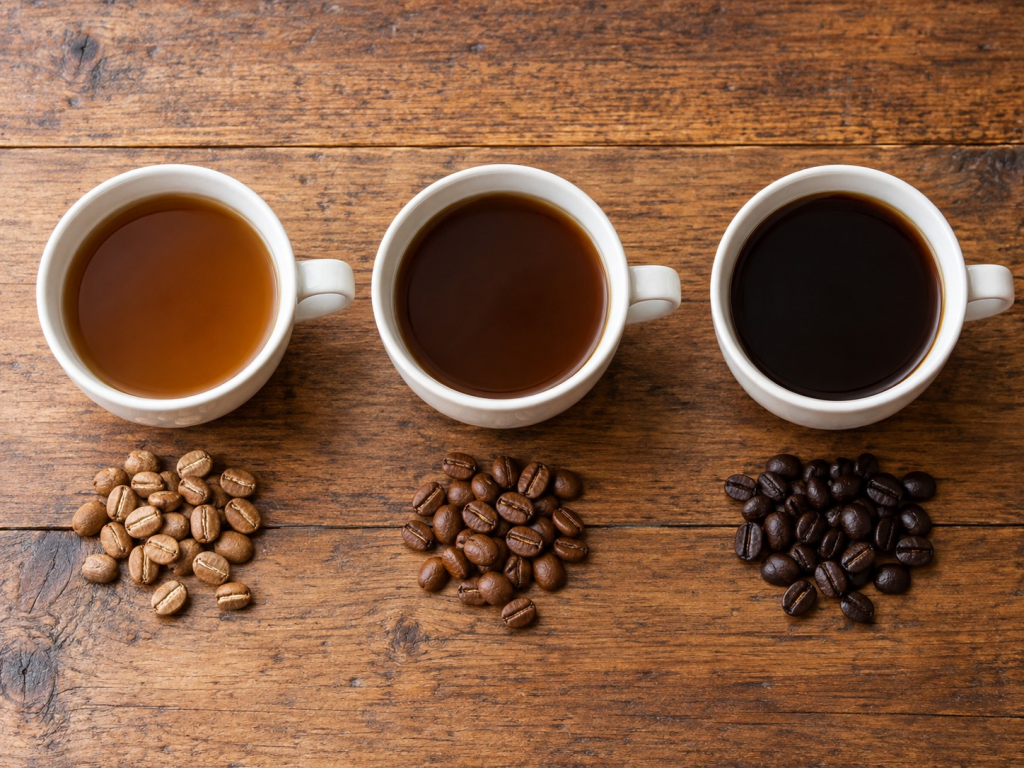
Here is the simplest comparison of the three main coffee roast levels.
| Feature | Light roast | Medium roast | Dark roast |
|---|---|---|---|
| Typical colour | Light brown | Medium brown | Dark brown |
| Surface | Usually dry | Usually dry | Sometimes oily |
| Common flavour style | Fruit, citrus, floral | Chocolate, caramel, nuts | Smoke, dark chocolate, bittersweet |
| Origin character | Often more noticeable | Balanced with roast flavour | Often less noticeable |
| Perceived acidity | Brighter | Moderate | Usually lower |
| Bitterness | Usually lower | Moderate | Usually higher |
| Suggested first method | Pour-over | Drip machine | French press or moka pot |
| Good starting point for | Flavour explorers | Most everyday drinkers | Bold-coffee fans |
These descriptions reflect common patterns, not guaranteed results. Bean origin, variety, processing, freshness and brewing also affect flavour.
Which Coffee Roast Is Strongest?
Dark roast often tastes strongest. This does not mean dark roast always contains the most caffeine.
Flavour strength and caffeine are different measurements. Dark roasting creates more prominent roasted and bitter flavours, so the coffee often tastes more intense.
Coffee dose, bean variety, grind, brewing method and serving size all affect caffeine in the finished drink.
A 2024 study published in Scientific Reports found brewed caffeine levels varied across roast degrees. Under the study’s brewing conditions, dark roasts generally produced less caffeine in the cup than light and medium roasts. Extraction differences played an important role. Read the full roast and caffeine study.
Another controlled study found no significant caffeine difference among its brewed light, medium and dark samples. Read the 2025 roast-level study.
Those results explain why sweeping claims about caffeine are unreliable. Roast level does not provide enough information by itself.
If caffeine matters to you, measure your coffee consistently and watch the serving size. Do not rely on the word “dark.”
Match Your Roast to Your Coffee Maker
No brewing method requires one specific roast. The following suggestions provide practical starting points.
Automatic Drip Coffee Maker
Start with a medium roast. Its balanced flavour works well for many everyday drip drinkers.
Move darker if the coffee tastes too light for you. Try a lighter roast if you want brighter fruit or floral flavours.
Pour-Over
Light and medium roasts often suit pour-over because the method gives you close control over water flow, grind and brewing time.
French Press
Medium and dark roasts often pair well with the fuller texture produced by a French press and its metal filter.
Moka Pot
Medium-dark and dark roasts provide the rich flavour many moka pot drinkers expect. Keep the heat controlled. Burnt coffee is punishment, not breakfast.
Espresso Machine
Espresso is a brewing method, not a roast level. The National Coffee Association confirms “espresso roast” has no single roast definition.
Medium-dark and dark roasts often pair well with milk because their roasted flavours remain noticeable. Light-roast espresso offers a brighter alternative for experienced home brewers.
Brewing problems sometimes get blamed on coffee roast levels. Before tossing the bag, check your grind, coffee quantity and water. My guide to brewing a better cup at home covers the basic adjustments.
How to Choose a Canadian Roasted Coffee
Canadian roasted coffee begins with green coffee imported from coffee-growing countries. Canadian roasters select, blend and roast those beans here.
Statistics Canada reported that Canada imported 15.6 million kilograms of unroasted, non-decaffeinated coffee during July 2023 alone. Colombia, Brazil, Honduras and Guatemala supplied most of those imports. Read the Statistics Canada coffee report.
My guide explaining where Canadian coffee roasters get their beans follows the sourcing journey in more detail.
You should also understand what coffee roasted in Canada means before treating every maple leaf as proof of Canadian ownership.
Use this shopping process:
- Decide whether you want bright, balanced or bold coffee.
- Check the stated roast level.
- Read the tasting notes.
- Match the roast with your usual brewer.
- Look for a roast date.
- Check where the coffee was roasted.
- Buy a smaller bag when trying something unfamiliar.
- Keep a note about what you liked.
Sampler packs offer a practical way to compare coffee roast levels. Three smaller bags teach you more than one enormous bag you stop enjoying by Tuesday.
Whole bean coffee gives you control over grind size. Pre-ground coffee saves time and avoids buying a grinder. My whole bean versus ground coffee comparison helps you choose between them.
My Simple Roast Recommendation
If you feel lost, begin with medium roast. It offers a balanced introduction without pushing too far toward bright fruit or heavy roast flavour.
Move toward light roast if you want clearer origin flavours. Move toward dark roast if you enjoy bitterness, dark chocolate and strong roasted flavour.
Buy small bags while experimenting. Change one brewing factor at a time. Brewing three coffees with three different grinds tells you little beyond the fact you now have more dishes.
Most importantly, ignore anyone who insists your favourite roast is wrong. Coffee is supposed to make your morning better, not turn breakfast into a competition.
Frequently Asked Questions
Why do some dark-roast coffee beans look oily?
Coffee beans naturally contain oils. Greater roast development makes surface oil more common. Oil also becomes more visible as some roasted beans age. Oily beans are not automatic proof of freshness, staleness or quality. Smell, roast date, storage and flavour provide better evidence.
Are breakfast roast and medium roast the same?
Not always. Breakfast roast usually suggests a lighter or balanced flavour, but companies define the term differently. Check the roast description, colour and tasting notes instead of trusting the name alone.
Is espresso roast a separate coffee roast level?
No. Espresso describes the brewing method. An espresso roast reflects the roaster’s preferred profile for espresso. It is often medium to dark, although lighter espresso roasts also exist.
Why does my dark roast taste burnt?
The roast might be darker than you enjoy. A fine grind, excessive brewing time or poor equipment cleaning also creates harsh flavours. Try a slightly coarser grind and clean the brewer before replacing the coffee.
Should oily coffee beans go into an automatic grinder?
Check your grinder’s instructions. Some manufacturers warn about oily beans because residue collects inside the hopper and grinding mechanism. If your grinder accepts them, clean it according to the manufacturer’s directions. Never pour water into a grinder unless its manual specifically instructs you to do so.
Does French roast mean the coffee came from France?
No. French roast describes a dark roasting style. It does not identify where the beans grew or where the coffee was roasted.

Choose Coffee Roast Levels by Flavour
Coffee roast levels become easier once you stop searching for one universally superior roast.
Choose light for bright fruit and floral notes. Choose medium for balance and flexibility. Choose dark for bold, roasted flavour.
Medium roast is the safest starting point. Dark roast wins in my kitchen. Your winner belongs in your cup.
Try a small bag from a Canadian roaster, brew it using your usual method and note what you enjoy. Then tell me your favourite roast in the comments. I am always willing to discuss coffee, especially with one already in my hand.
Internal Links Used
- How to Read a Coffee Bag Label: Roast Date, Origin and Tasting Notes
- Kicking Horse Coffee Review: Which Blend Is Worth Buying?
- Brew the Perfect Cup of Coffee at Home
- Where Do Canadian Coffee Roasters Get Their Beans?
- Coffee Roasted in Canada: What Canadian-Roasted Coffee Means
- Whole Bean vs Ground Coffee: Which Should You Buy?
External Links Used
- Coffee Association of Canada: Roasting
- National Coffee Association: Coffee Roasts
- Specialty Coffee Association: Why Roast Level Matters
- Scientific Reports: Caffeine Content and Degree of Roast
- Roast Level, Timing and Caffeine Research
- Statistics Canada: Coffee Import Statistics
- Coffee Association of Canada: Coffee Supply Chain
Please note: the opinions expressed in this post should never be construed as advice. The thoughts are based on my experiences and those of my friends and family. I am not a restaurateur or a formal barista. I just love coffee and love sharing what I learn with everyone. Please enjoy and share your favourites in the comments section.
Also: If considering a change in diet, exercise, nutrition and/or supplements, you must consult your medical practitioner to make sure that what you are about to embark upon doesn’t interfere with your current treatments.
Another note: on images, if the picture does not have my logo, I have downloaded it from either Unsplash or iStock. If you are looking for images, please check them out. I may from time to time use AI to create or enhance my images.