

How to Taste Coffee at Home: A Simple Beginner’s Guide
How to taste coffee at home using two cups and a simple score sheet. Compare aroma, sweetness, acidity, body, flavour and finish without coffee jargon.
Table of Contents
Introduction
How to taste coffee at home starts with two coffees, one brewing method and a few honest notes. You do not need professional training, expensive cups or the ability to identify “sun-warmed apricot” before breakfast.
The easiest method is a side-by-side comparison. Brew two coffees the same way, taste each one as it cools, and record what you notice about aroma, sweetness, acidity, body, flavour and finish.
Your goal is not to impress anyone. You are learning which coffee tastes good to you and why. That knowledge makes the next bag easier to choose.
How to Taste Coffee at Home: The Quick Answer
| Step | What to do | What to notice |
|---|---|---|
| 1 | Choose two different coffees | Roast, origin or processing differences |
| 2 | Brew both coffees the same way | A fair comparison |
| 3 | Smell before sipping | Chocolate, nuts, fruit, spice or roast aroma |
| 4 | Taste while hot, warm and cooler | Flavours that appear as the cup cools |
| 5 | Compare sweetness, acidity and body | The main differences between cups |
| 6 | Notice the finish | What remains after swallowing |
| 7 | Write a simple verdict | Which coffee you prefer and why |
What You Need for Coffee Tasting at Home
When you learn how to taste coffee at home, the process should feel relaxed. Start with equipment you already own:
- Two contrasting coffees
- Your regular drip machine, pour-over or French press
- Two identical mugs
- Fresh water
- A tablespoon or coffee scoop
- A notebook or coffee tasting score sheet
- An optional kitchen scale
Choose coffees with an obvious difference. Compare a light roast with a dark roast, two countries of origin, or a familiar grocery-store blend with a fresh Canadian-roasted coffee.
Do not start with six bags. By the fourth cup, your tongue will file a complaint and everything will taste like coffee.
If the shelf looks confusing, read my guide to reading a coffee bag label. It explains roast dates, origins and tasting notes without the fancy-bag nonsense.
Prepare a Fair Side-by-Side Coffee Tasting
The first rule when learning how to taste coffee at home is consistency. Use the same amount of coffee, water, grind size, brewing time and water temperature for both cups.
Changing several things at once ruins the comparison. A finer grind or longer brew might make one coffee taste bitter even when the beans are fine.
Use your normal brewer. Professional cupping has value, but most readers want to know how coffee will taste from the machine sitting on their counter.
Whole beans ground shortly before brewing usually provide a stronger aroma. Pre-ground coffee still works if it is what you drink. My whole bean versus ground coffee guide explains the freshness and convenience trade-off.
How to Taste Coffee at Home Step by Step
1. Smell the Dry Coffee
Smell each coffee before brewing. You might notice cocoa, toasted nuts, spice, fruit or a strong roasted scent.
Start with broad families. “Nutty” is useful. You do not need to argue whether the nut is an almond or a pecan.
2. Smell the Brewed Coffee
Smell each cup again after brewing. The wet aroma often differs from the dry grounds. Does the aroma seem sweet, fruity, roasted, spicy or earthy?
3. Take a Small First Sip
Take a small sip and let the coffee spread across your tongue. Some tasters slurp to draw in air and spread the liquid. At home, a deliberate sip works without sounding like a blocked vacuum cleaner.
Your first impression matters when learning how to taste coffee at home. Does the coffee seem bright, smooth, heavy, sweet, bitter or dry?
4. Taste the Coffee as It Cools
Hot coffee hides detail. Taste each cup when hot, warm and closer to room temperature. Sweetness, fruit and unpleasant flavours often become easier to notice as the coffee cools.
This step matters when you learn how to taste coffee at home. One quick sip from a steaming mug gives you only part of the story.
5. Reset Your Palate
Take a sip of room-temperature water between coffees. Plain crackers also help if you need a neutral bite.
Avoid strongly flavoured food, toothpaste, perfume or scented candles before tasting. Your maple-bacon breakfast should not receive credit for the coffee’s tasting notes.
Six Things to Notice During Coffee Tasting for Beginners
| Quality | Plain-language question | Useful words |
|---|---|---|
| Aroma | What does the coffee smell like? | Chocolate, nutty, fruity, floral, spicy, smoky |
| Sweetness | Does it remind you of sugar, honey or ripe fruit? | Caramel, brown sugar, honey, berry |
| Acidity | Does it feel lively or tangy? | Bright, crisp, citrusy, soft, sharp |
| Body | How heavy does it feel in your mouth? | Light, tea-like, silky, creamy, full |
| Flavour | What familiar foods come to mind? | Cocoa, nuts, fruit, spice, toast |
| Finish | What remains after you swallow? | Clean, sweet, dry, bitter, smoky, lingering |
Sweetness
Coffee contains no added sugar unless someone puts it there. In tasting language, sweetness describes an impression resembling caramel, honey, chocolate or ripe fruit.
Acidity
Acidity describes brightness or liveliness, not simply whether coffee upsets your stomach. Think of the difference between a crisp apple and a flat, cooked apple.
Balanced acidity works with the rest of the cup. Sour coffee feels sharply unpleasant and often points to a brewing problem.
Body
Body means texture or weight. Compare skim milk, whole milk and cream. Coffee offers a similar range from light and tea-like to full and creamy.
Flavour and Finish
Flavour notes describe familiar sensory reminders. A coffee labelled “blueberry” usually contains no blueberries. The aroma or flavour simply reminds tasters of them.
The finish is what stays after swallowing. A clean chocolate finish might feel pleasant. A harsh, ashy bitterness might send the bag toward emergency guest-coffee duty.
How to Describe Coffee Taste Without Pretending
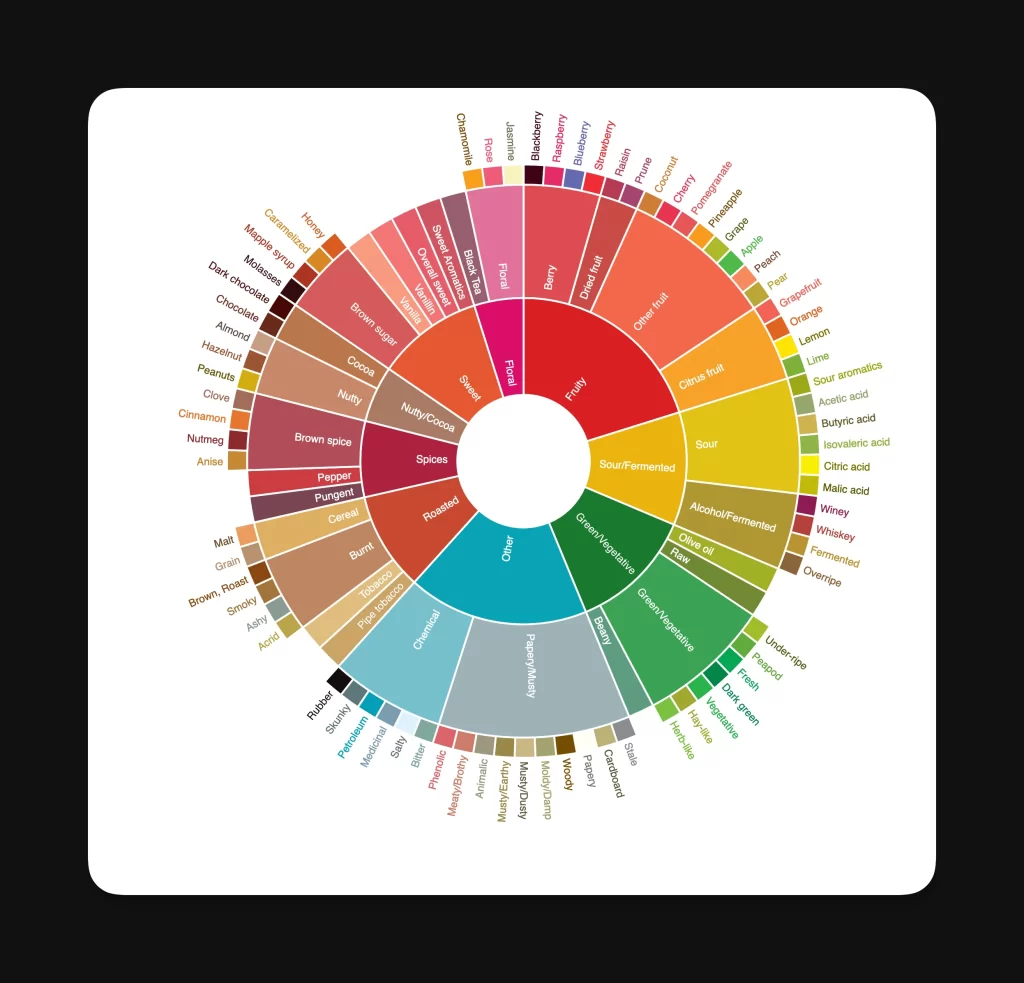
Start broad, then get specific only when the answer feels obvious.
- Choose a broad family: sweet, fruity, nutty, chocolatey, floral, spicy or roasted.
- Choose a closer comparison: citrus, berry, cocoa, almond, cinnamon or toast.
- Describe the intensity: mild, clear, strong or overpowering.
- Add your preference: liked it, disliked it or would change the brew.
The World Coffee Research Sensory Lexicon supplies shared references for coffee aromas and flavours. The Specialty Coffee Association Coffee Taster’s Flavor Wheel helps tasters move from broad categories toward more specific descriptions.
Those resources are guides, not exams. “Smooth, nutty and pleasantly sweet” tells you more than three paragraphs of forced poetry.
A Simple Coffee Tasting Score Sheet
When learning how to taste coffee at home, use a five-point scale. Your notes matter more than mathematical perfection.
| Category | Coffee A | Coffee B |
|---|---|---|
| Aroma, 1 to 5 | ||
| Sweetness, 1 to 5 | ||
| Acidity, low to high | ||
| Body, light to full | ||
| Main flavours | ||
| Finish | ||
| Would I buy it again? |
Keep your early notes. After several tastings, patterns appear. You might favour medium roasts with chocolate notes, or lighter coffees with citrus and floral aromas.
Once you know your preference, my guide to light, medium and dark coffee roast levels will help narrow your next purchase.
Common Home Coffee Tasting Mistakes
- Tasting only while piping hot: heat masks useful detail.
- Changing the brewing method: brew both coffees under matching conditions.
- Adding milk or sugar immediately: taste black first, then prepare the cup as usual.
- Testing too many coffees: two or three provide enough contrast.
- Chasing the bag’s tasting notes: write your impression before reading the package.
- Confusing preference with quality: a respected coffee still might not suit you.
Choosing Canadian Coffees for a Home Tasting
To practise how to taste coffee at home with Canadian beans, choose two freshly roasted bags with one clear difference.
- Light roast versus dark roast from one roaster
- Washed versus natural-process coffee
- Single-origin coffee versus a house blend
- Two Canadian roasters using beans from the same country
- Fresh whole beans versus your regular pre-ground coffee
“Canadian coffee” usually refers to coffee roasted, blended or packaged in Canada. Read what Canadian-roasted coffee means before judging the maple leaf on the package.
See my practical coffee-making essentials for weighing, grinding, brewing and tasting at home. As an Amazon Associate, I earn from qualifying purchases at no extra cost to you.
Frequently Asked Questions
How do beginners taste coffee?
Brew two contrasting coffees under the same conditions. Smell each one, take small sips, taste again as the cups cool, and compare aroma, sweetness, acidity, body, flavour and finish.
Do I need special equipment to taste coffee at home?
No. Use your regular brewer, two matching mugs, fresh water and a notebook. A kitchen scale and grinder improve consistency but are not required for your first tasting.
Should coffee be tasted hot or cool?
Taste it at several temperatures. Start hot, return when warm, and taste again as it approaches room temperature. Different flavours become easier to notice as the cup cools.
What is the difference between coffee tasting and cupping?
Coffee tasting is a general comparison using any sensible brewing method. Cupping follows a standardized preparation and evaluation process used by coffee professionals. A home tasting is simpler and focuses on your buying preferences.
How do I describe coffee taste?
Begin with broad words such as chocolatey, nutty, fruity, floral, spicy or roasted. Then describe sweetness, acidity, body and finish. Use familiar words rather than forcing an obscure flavour note.
Are coffee tasting notes added flavours?
Usually not. Tasting notes describe aromas and flavours that remind tasters of familiar foods or spices. Flavoured coffee is different and should identify added flavouring on the package.
How to Taste Coffee at Home Without the Fuss
Learning how to taste coffee at home makes buying coffee less random. Compare two cups, keep the brewing method consistent, taste at different temperatures and write down what you enjoy.
I am not a professional cupper or barista. I am a coffee drinker who has learned more by comparing two mugs than by staring at hundreds of impressive words on bags.
Try a side-by-side tasting this week. Then leave a comment with your winner and the plainest tasting note you wrote. “Tastes like good coffee” is allowed, although we should aim slightly higher on round two.
Internal Links Used
- How to Read a Coffee Bag Label
- Whole Bean vs Ground Coffee
- Coffee Roast Levels
- What Canadian-Roasted Coffee Means
External Links Used
- Specialty Coffee Association Coffee Taster’s Flavor Wheel
- Specialty Coffee Association Coffee Value Assessment
- World Coffee Research Sensory Lexicon
- Counter Culture Coffee Tasting Notes Guide
Please note: the opinions expressed in this post should never be construed as advice. The thoughts are based on my experiences and those of my friends and family. I am not a restaurateur or a formal barista. I just love coffee and love sharing what I learn with everyone. Please enjoy and share your favourites in the comments section.
Also: If considering a change in diet, exercise, nutrition and/or supplements, you must consult your medical practitioner to make sure that what you are about to embark upon doesn’t interfere with your current treatments.
Another note: on images, if the picture does not have my logo, I have downloaded it from either Unsplash or iStock. If you are looking for images, please check them out. I may from time to time use AI to create or enhance my images.